

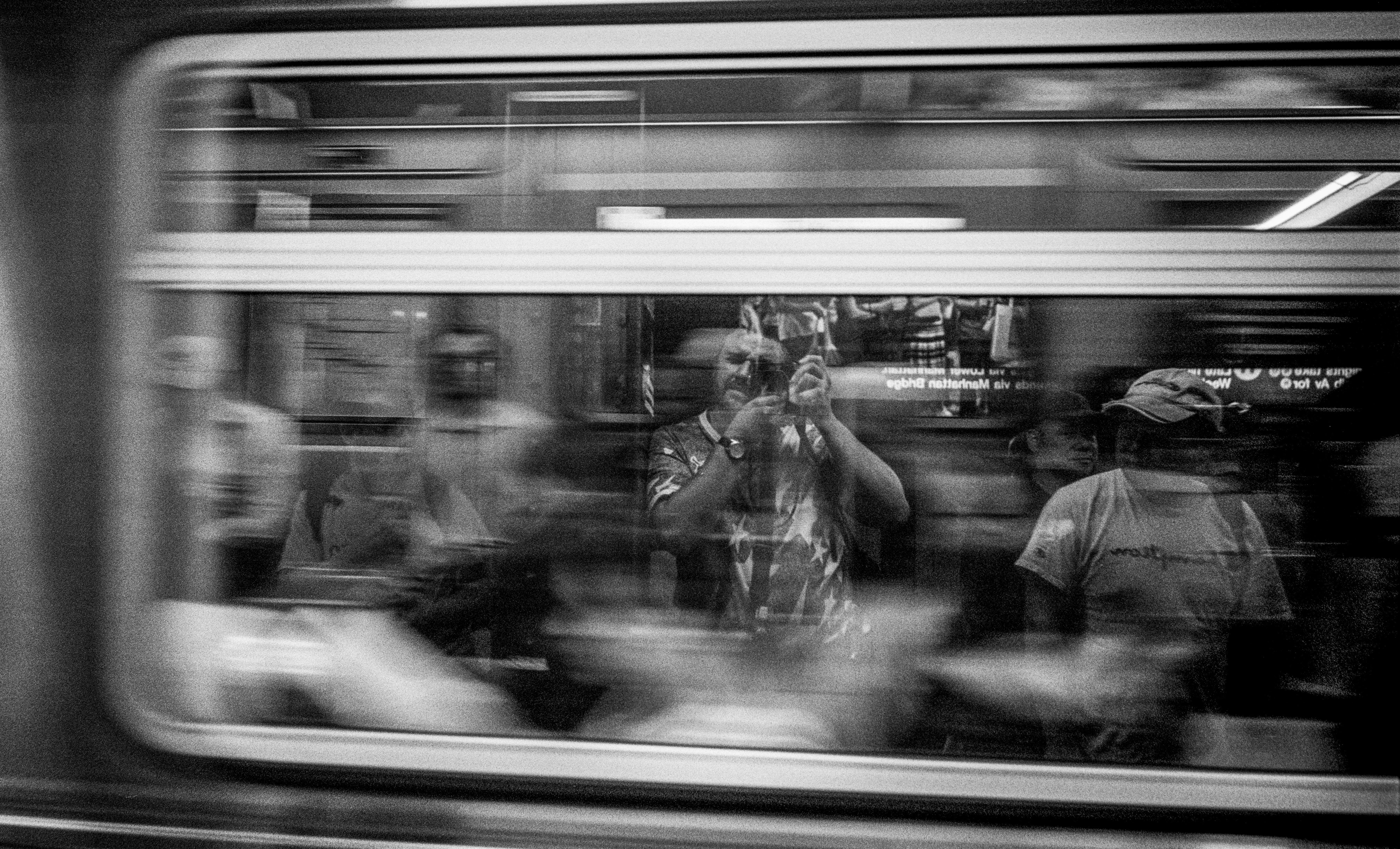
What compels someone to document? Whether through writing, photography, video, or a simple voice memo, what is the urge that drives our finger to click the shutter, press record, pick up the pencil, or open the notes app? For millennia, we’ve felt compelled to leave some account of the lives lived and the moments we decided were worth preserving, whether etched into rocks or imprinted onto rolls of film. And if the historical evidence wasn’t clear enough, perhaps the current owners of our attention spans, Facebook, Instagram, and company, flourishing off an entire industry built around telling stories, will affirm our obsession with documenting.
During the 39 days I spent traveling around the country, giving in to that impulse and scratching the itch to document, I found some other addicts out there on the road. Some stayed local to their city or region. Others temporarily moved across the country. Some came from entirely different countries just to witness the World Cup for themselves and leave with a firsthand account of all they saw.
Up in the Northeast lives one of these wickedly passionate storytellers, Luke Stergiou. Luke is a proud New Englander, specifically from Manchester, NH. He has a lot of heart for the place he calls home. While I was planning my road trip, he shared that he was hoping to embark on a journey of his own, focusing specifically on New England and the communities that have made homes there. It’s important to note that Luke isn’t a full-time photographer. He’s an Account Specialist for New Balance. But seemingly every break and free minute he gets goes toward documenting football in the region. The World Cup wasn’t going to be any different.
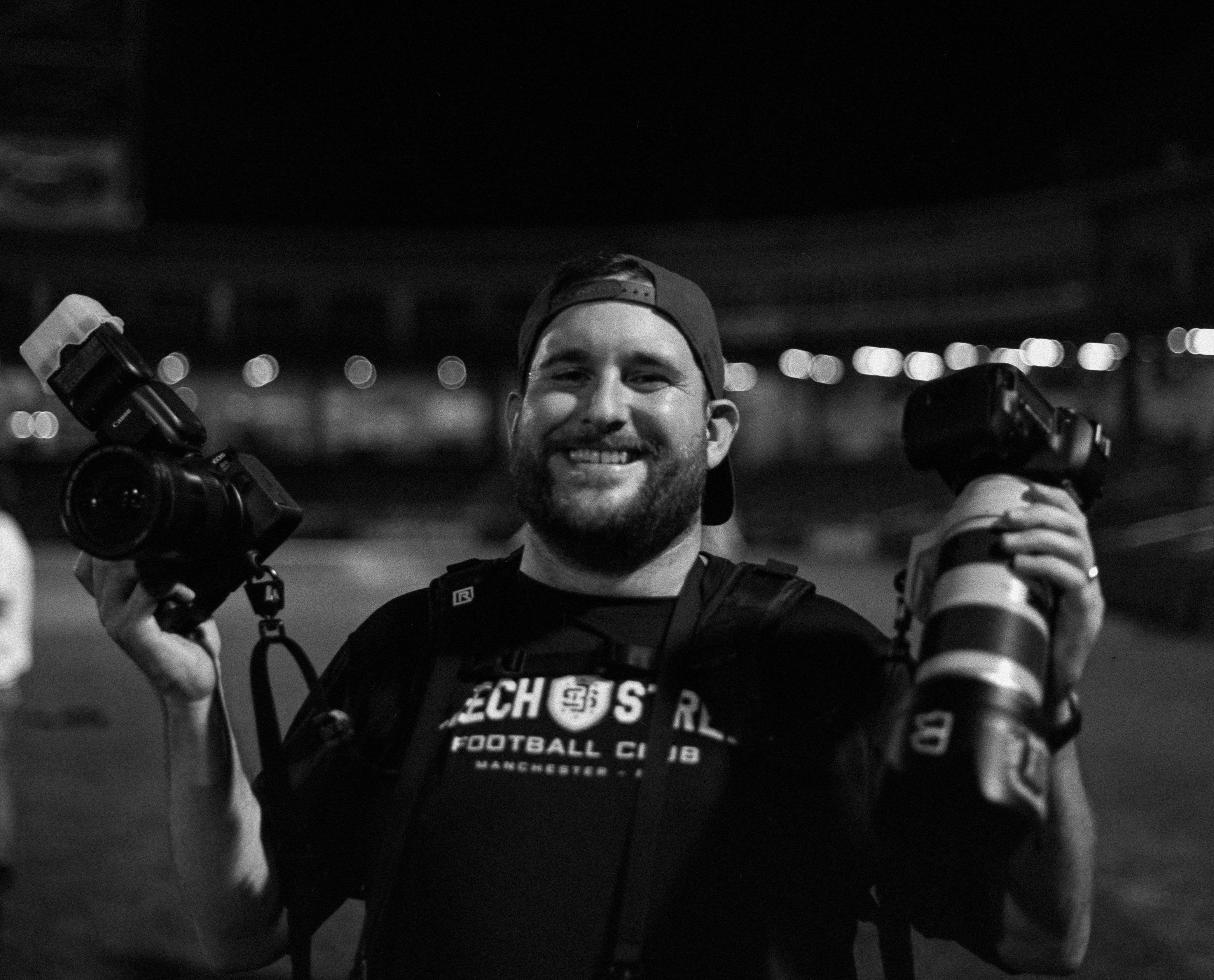
In his off hours this summer, he made his way through Rhode Island, New Hampshire, and Maine documenting immigrant communities that, to him, weren’t separate from New England’s identity but part of what makes it home. He wasn’t showing up just to check a box, there was purpose behind it. I was fortunate enough to join him on two occasions, and one took us to Manchester, New Hampshire, specifically the Afro Fusion Lounge, where a room full of Congolese supporters gathered for Congo’s match against England. Congo went up 1–0 early in the game and, for a moment, looked on the verge of making World Cup history. Arguably, Messi winning his last World Cup wouldn’t have made bigger headlines. Sadly, England eventually found its way back into the match and sent Congo home.
It wasn’t until after we grieved alongside everyone else that I started to witness Luke’s larger reason for being there. He began talking with the restaurant’s general manager, Peter, about Beech Street FC (a cost-free community soccer club in New Hampshire) and the work they were doing within the community. I don’t remember every detail of the conversation, but I remember watching Luke engage not as someone who had simply arrived to take some photographs and move on. There was history there. There were relationships. That was when I understood a little more clearly why Luke documents. It isn’t to become King of the North (as I lovingly call him) or to fill walls with his photographs. Luke cares deeply about New England, and photography is simply a vehicle for the expression of a much larger commitment to the place he calls home.
For others, telling the story meant leaving home altogether. Jonathan “Jonny” Borruso did almost the complete opposite of Luke. He left one coast for another, temporarily trading San Francisco for Princeton, New Jersey, close enough to New York City to taste the opportunities but far enough away to get a solid hour-plus nap on the train home after another long summer day. I didn’t know Jonny before this summer, but during the first week of the World Cup, I came across a social media post featuring some moving films that immediately caught my attention and tagged in the post was @jonathanborruso.
Then, while I was in New York on leg two of my five-leg journey, a mutual friend told me I needed to meet him. That friend was Harlem Lamine, and in my world, Harlem’s stamp of approval is worth more than gold. So we left our apartment in the Bronx and made the hour-long trip to Brooklyn, where I finally met Jonny. We didn’t talk much that first time. We were both busy doing what us addicts do best: documenting football fans. What caught my attention, though, was that video wasn’t Jonny’s preferred way of working. Photography was. There was something intriguing about seeing someone whose instinct was rooted in still images suddenly seeing the World Cup in motion. It added another layer to the story he was telling.
I eventually learned that Jonny had rented a place with a roommate in New Jersey for the entirety of the tournament, which naturally made me wonder: why? Why put yourself through 40,000-step days, eight-plus hours of walking, and catching the final train home night after night?
Football is a love language of his. And photography had become one of his tools for speaking it. But this trip wasn’t about getting picked up by a major publication or walking away with some career-changing assignment. It was about falling in love with photography again. About returning to something that had once given him a way to express himself, reach out into the world, and connect with people who spoke the same language he did. There was something beautiful about witnessing that happen in real time. By the end of the tournament, it seemed pretty clear that Jonny and photography probably aren’t going to fall out of love again anytime soon, and I think we’re all better for it.
For others, leaving their country altogether felt necessary. Harlem and I became friends years ago through a collaborative project. Although we both eventually stepped away from it, I continued to admire the work he was making. Harlem isn’t a one-trick pony. What I’ve always admired about his storytelling is how layered it is. Photography, objects, video, writing, commentary; he moves between them because he seems interested less in one individual piece and more in what all of those pieces might say together. He sees the whole when some of us only see a part. He’s the Xavi Hernández of this documenting journey, or maybe Pep Guardiola depending on the day, constantly piecing together ideas and observations in search of what they might reveal about football and the world around it. He is a true philosopher and romantic of the sport.
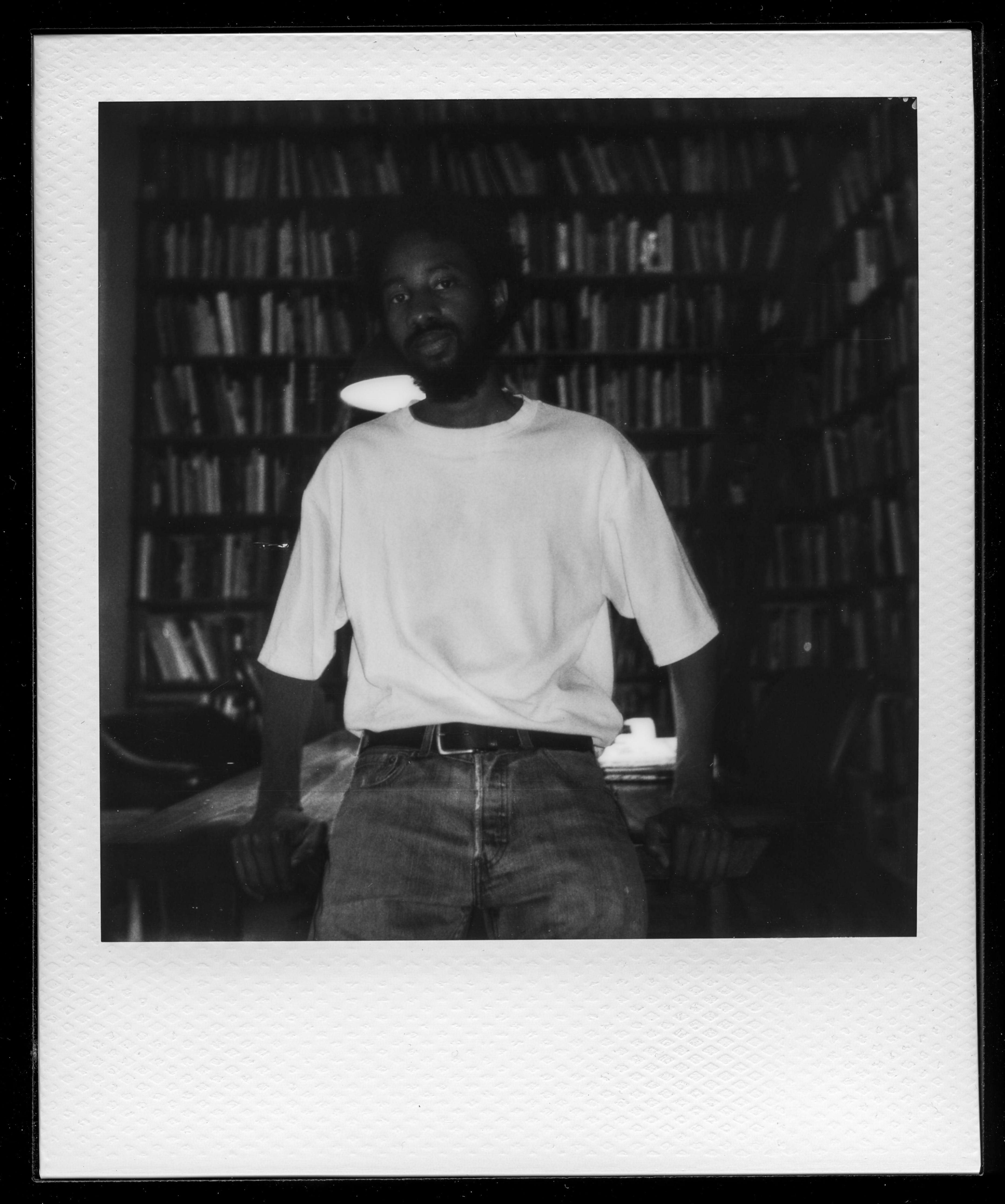
When I saw he was going to be in New York around the same time as me, I knew I needed to speed up my own planning to make our paths cross, and man am I glad I did. We only spent about 24 hours together. We caught up, of course, but what I really walked away with was a better understanding of the art of observing. As a photographer, I like to think that I’m always paying attention and taking the world in. It sounds great when you put it that way, but the reality is not always quite as pretty.
Have you ever been around a dog when it smells food? You and that dog could have the strongest bond in the world, but the second it locks onto whatever is cooking, you are no longer the priority. Unless, of course, you happen to be holding the food, in which case you are still mostly a means to an end. I can be like that with a camera. Once I lock onto the event or scene in front of me, I become so obsessed with it that I can forget about everything happening along the edges.
Harlem doesn’t seem to move through the world that way. He notices the edges. Even in places he has seen time and time again, there is an innocent curiosity to the way he looks around, as though he is allowing himself to encounter everything for the first time. His trip from Belgium wasn’t simply about coming to America to photograph the World Cup. He came to observe it firsthand and make note of all the things surrounding it. Why, two weeks into the tournament, did a New York City newsstand have almost nothing acknowledging that the city was hosting the World Cup, let alone its final? How did street vendors seem to know when to move from Knicks merchandise one day to football jerseys the next? Who was deciding what mattered enough to sell, display, wear, or talk about?


Those details may sound insignificant on their own, but that is exactly what fascinates me about the way Harlem documents. He gathers all the details before deciding what they mean. A photograph here, an object there, a conversation, a storefront, something someone is selling on a corner. He observes first, collects the pieces, and then asks what larger idea might be hiding among them. Where I can sometimes become fixated on making the photograph I went looking for, Harlem reminded me that sometimes the story is sitting just outside of it.
And for me? Well, I’m still piecing that one together. I see some of myself in Jonny’s desire to fall back in love with photography because I have lost that spark earlier in the year too. I see myself in Luke’s sense of responsibility toward the place you call home and the people who make it special. And maybe most often, I recognize myself in Harlem’s curiosity, that drive to be present, observe, and try to make sense of what is happening in front of you. But even all of that still didn’t fully answer why I felt so compelled to do this particular project.
I pushed the limits of my 9-to-5 farther than I probably needed to. I drove endless miles, slept on couches, took naps at rest stops, crashed my rental, and bought a gym membership mostly so I could take showers. Why? Why did sharing a meal with landscapers in a Mexican restaurant matter so much to me? Why did speaking in Spanish with a Portuguese-speaking Cabo Verdean about why he left home stay with me? Why did a hug from an Egyptian elder as they cried tears of joy mean so much?
For most of the trip, I couldn’t put it into words. I kept asking myself those questions during the long drives, and little by little I edged closer to an answer until one finally became impossible to ignore.
I just wanted to belong.
I yearned for it and I still do. Ever since I can remember, I’ve never felt like I belonged. Whether that was in a friend group, at work, in this country, or even in this football-focused creative industry. I always feel like I’m on the edge of it, never fully in. But when I’m in these immigrant and diaspora communities, I feel like I am home and I can be myself.
Maybe that is part of why I kept finding myself drawn toward communities that are also negotiating ideas of home, identity, language, and belonging in their own ways. Not because our experiences are the same, but because something about those spaces felt familiar to me.
There was comfort in sitting at a table where several languages were being spoken, in hearing someone explain why they had left one home and built another, or watching a room of people erupt for a country thousands of miles away. In those moments, I didn’t feel like I was standing on the edge looking in. I could simply be there. Maybe that is why I spent so much of the World Cup away from the stadiums and official celebrations, looking instead toward restaurants, neighborhoods, homes, and the smaller places where people were creating a sense of belonging for themselves.
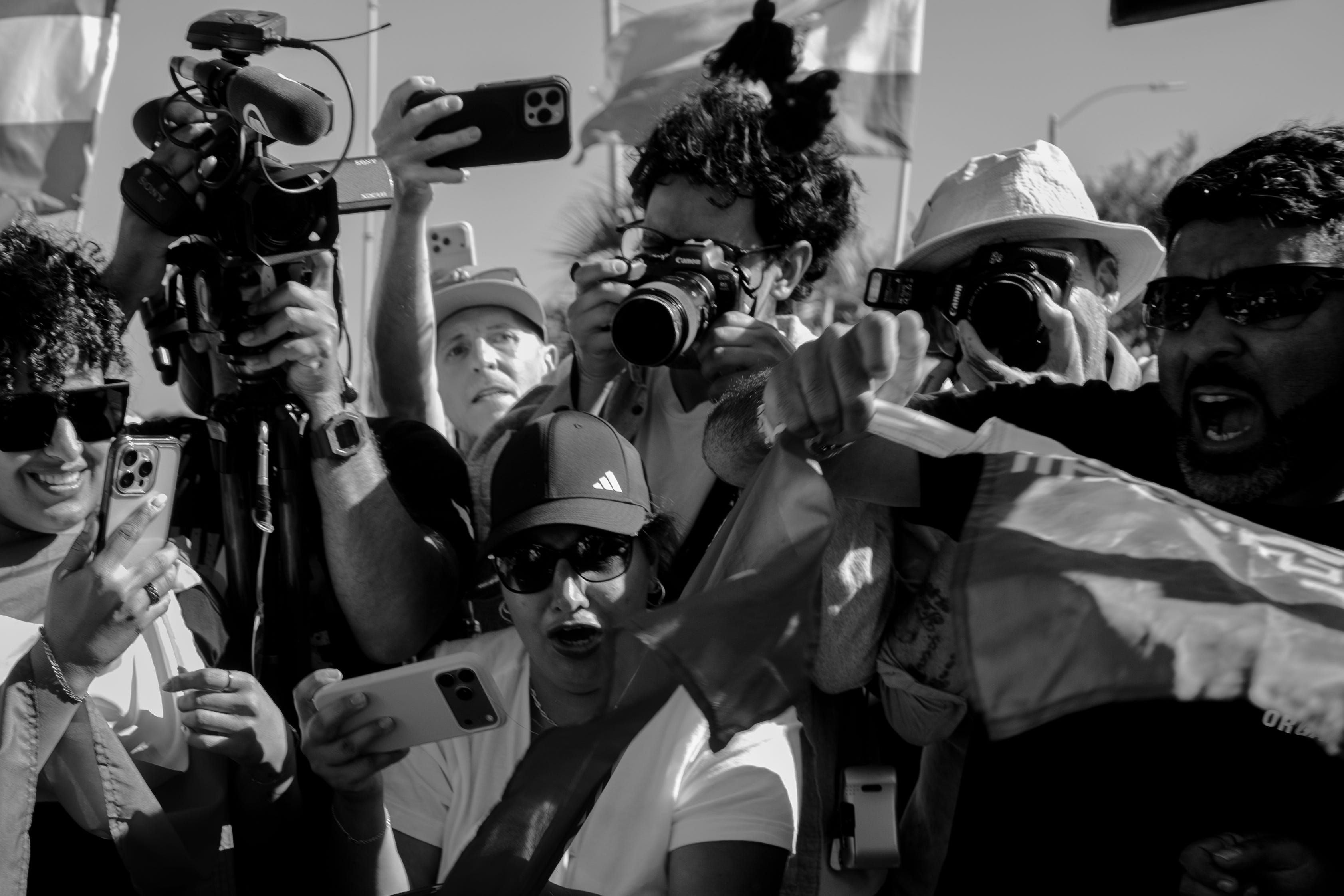
Maybe that’s part of the answer to this larger question I’m posing: why do we document? Sometimes we document because we feel a responsibility to the people and places around us. Sometimes the act of documenting gives something back to us. Sometimes we document because we’re trying to understand what’s happening in front of us. Sometimes we’re looking for connection, for home, or maybe even for ourselves. And sometimes we simply believe, for reasons we may not fully understand until much later, that what is happening deserves to be remembered.
The more I’ve thought about the people I met throughout the World Cup, the more another question began to pull at me. What would happen if Luke never photographed the way New England experienced this tournament? If Jonny stayed home in San Francisco? If Harlem never left Belgium? If I never made the trip at all? Each of us observes something different. Each of us leaves behind a different version of the same World Cup. And if the person behind the camera matters that much, what happens when certain perspectives aren’t there? What stories are left untold? What are we not seeing?
Be on the lookout for part two to hear my thoughts as I puzzle through them, or let me know your thoughts on the subject. Do you document? How? Why? What stories or perspective do you think are missing?
Love this read once again. i think that documenting what we do or where we are, chasing sometimes randomness, or taking a photo of something that might seem irrelevant at the first place will all makes sense with time. and will emerges natural patterns or topics that comes again and again that will tell us what we were actually seeking. maybe documenting this is also a way to try to dialogue with yourself.
Such a great piece! Feel like the complete clarity of why never really comes to us and is something that we're always chasing a bit. To feel completely purposeful and fulfilled in the way we think we know best!